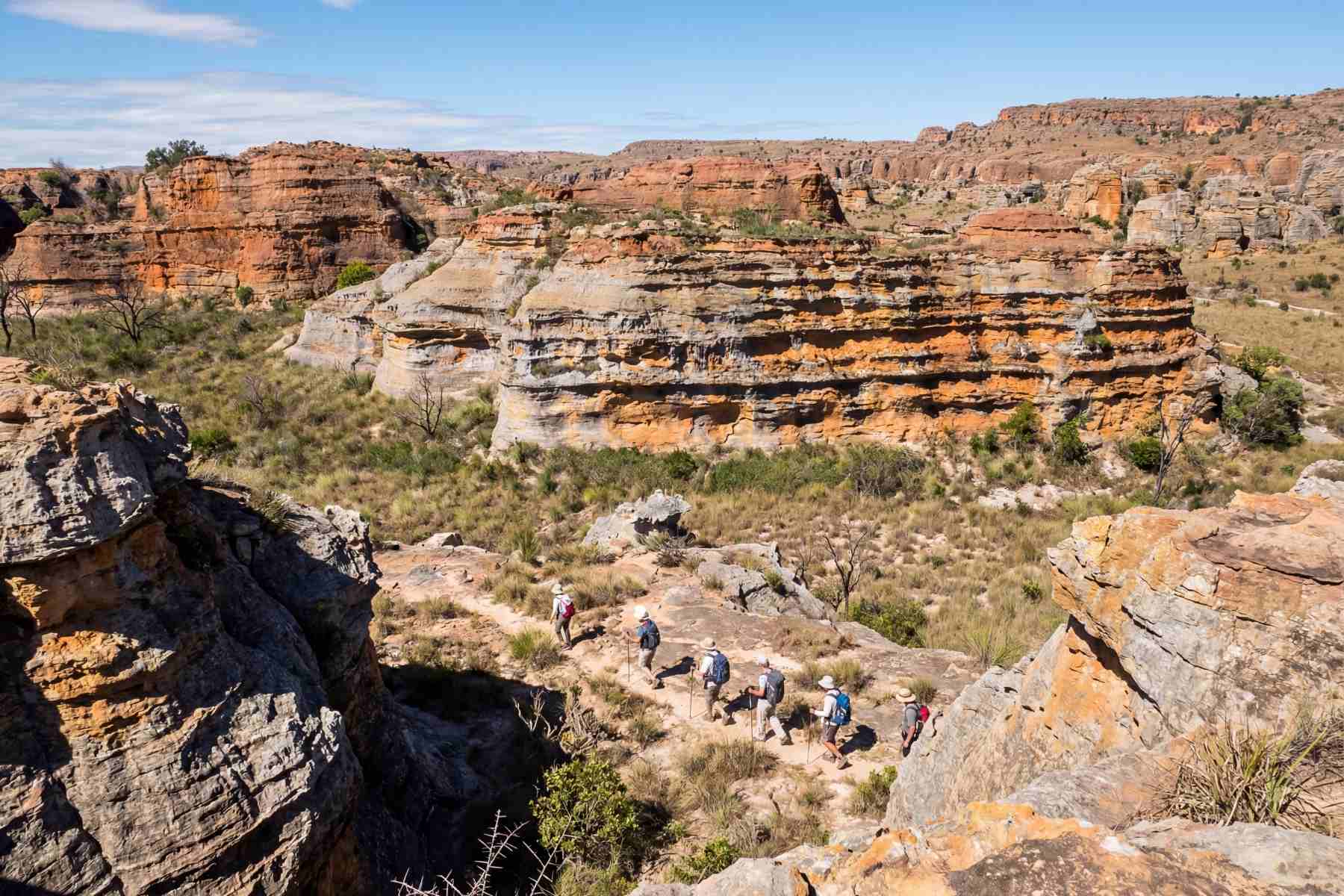
One road, 900 kilometres, and the island changes around you — terraced highlands, cloud forest, sandstone canyons, then the Mozambique Channel.
No payment now · A real person replies within 24h · 30% deposit only once you approve the plan
The RN7 is the only route in Madagascar where the landscape changes continuously rather than in jumps. You start in the highlands at Antsirabe's thermal springs, climb into the cloud forest at Ranomafana for the golden bamboo lemur, cross the Betsileo plateau, then drop into the sandstone canyons of Isalo before finishing on the reef at Ifaty. No internal flights until the last day — this is the overland version of Madagascar, and it is the route our own guides ask to be assigned to.
Six things that make this week different from a generic island itinerary.
900 km of changing country: rice terraces, eucalyptus highlands, rainforest, open savannah, then desert and reef. No two days look alike.
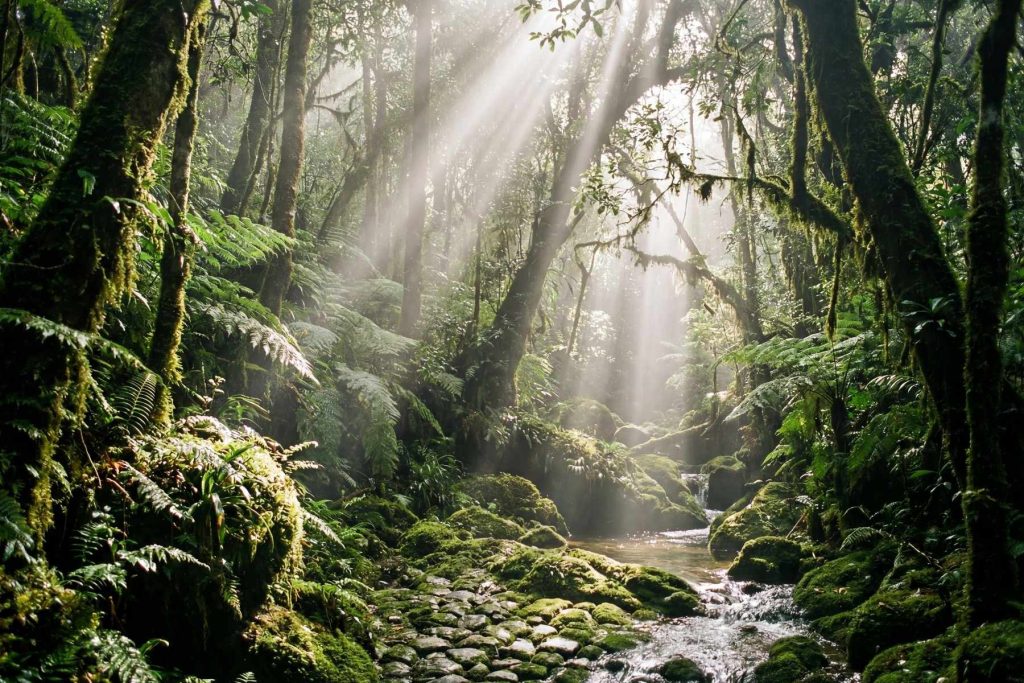
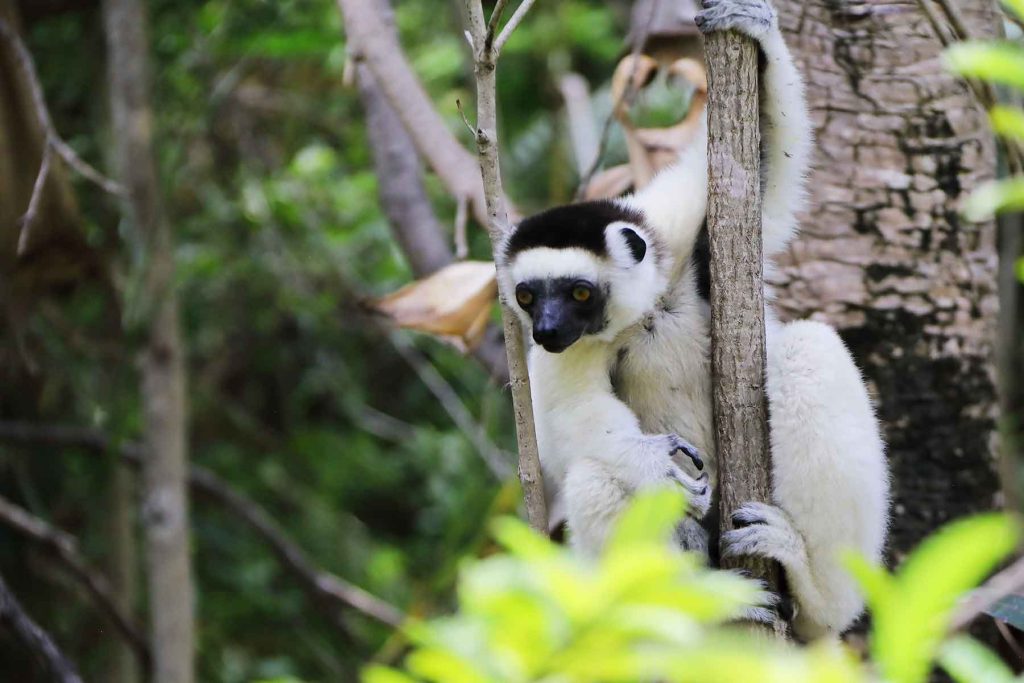
Found only in Ranomafana and discovered there in 1986. An afternoon walk and a night walk in the same forest.
A community-run reserve where ring-tailed lemurs sit on the granite boulders and the money goes straight to the village.
Sandstone massif with natural swimming pools, palm oases and the Window of Isalo at sunset. A full day on foot.
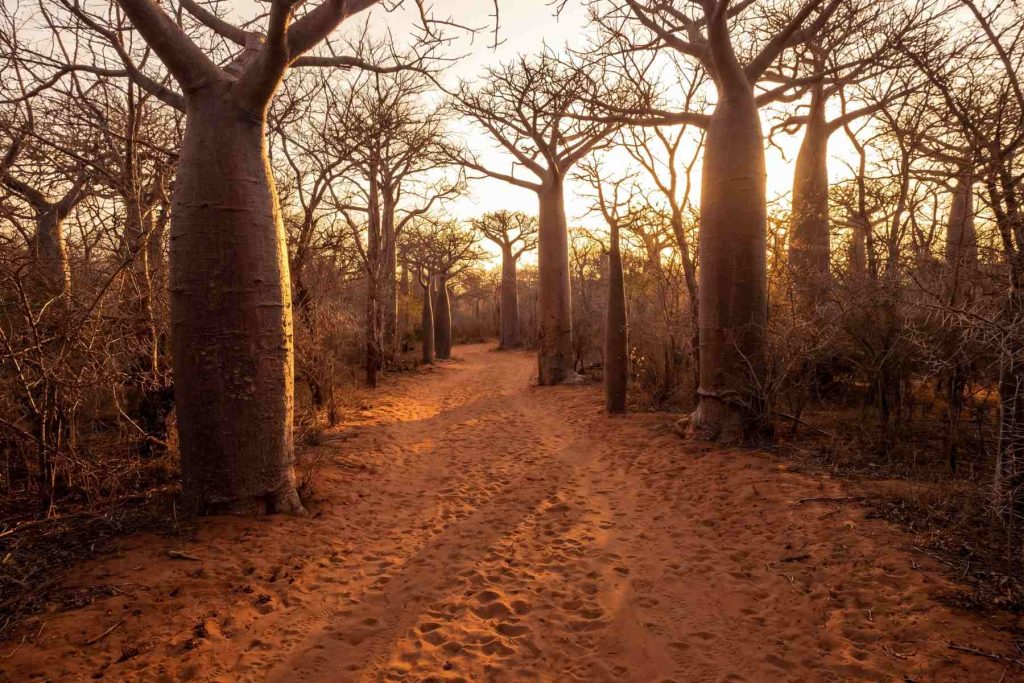
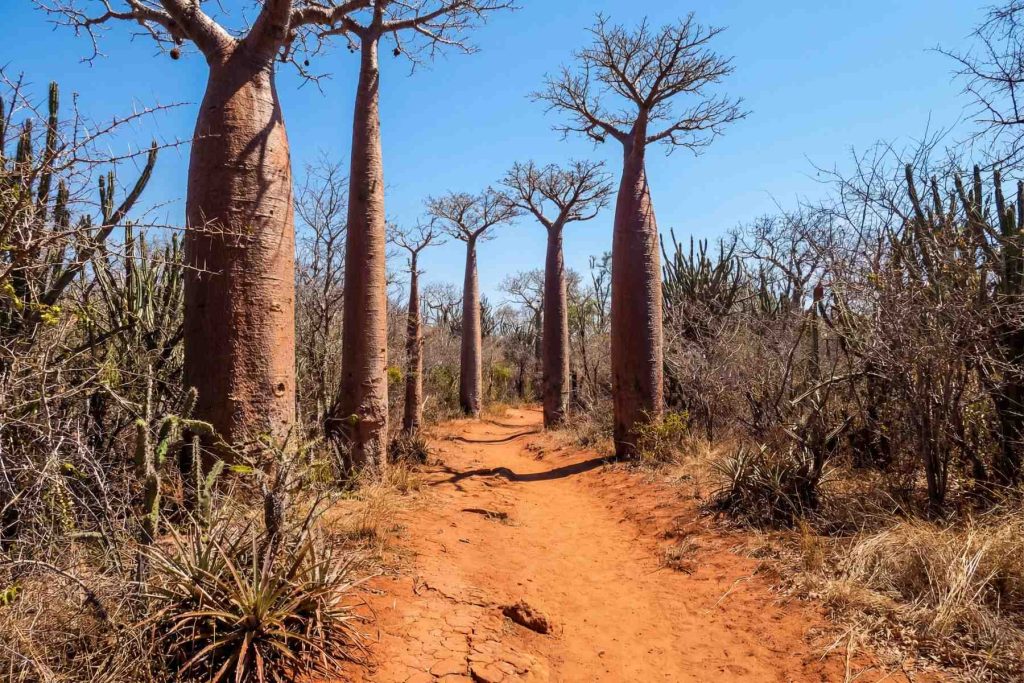
The weirdest ecosystem on the island — octopus trees, baobabs and a lagoon reef on the doorstep.
Aluminium pot casting at Ambatolampy, Zafimaniry wood carving at Ambositra, silk and paper at Ambalavao. Real workshops, not showrooms.
This is the real operating plan — we can move things around for your dates.
Met at Ivato and driven to your hotel in the capital, around 45 minutes depending on traffic. The evening is free. Your guide meets you at dinner to walk through the ten days ahead and check whether you want to shift anything before you leave the city.
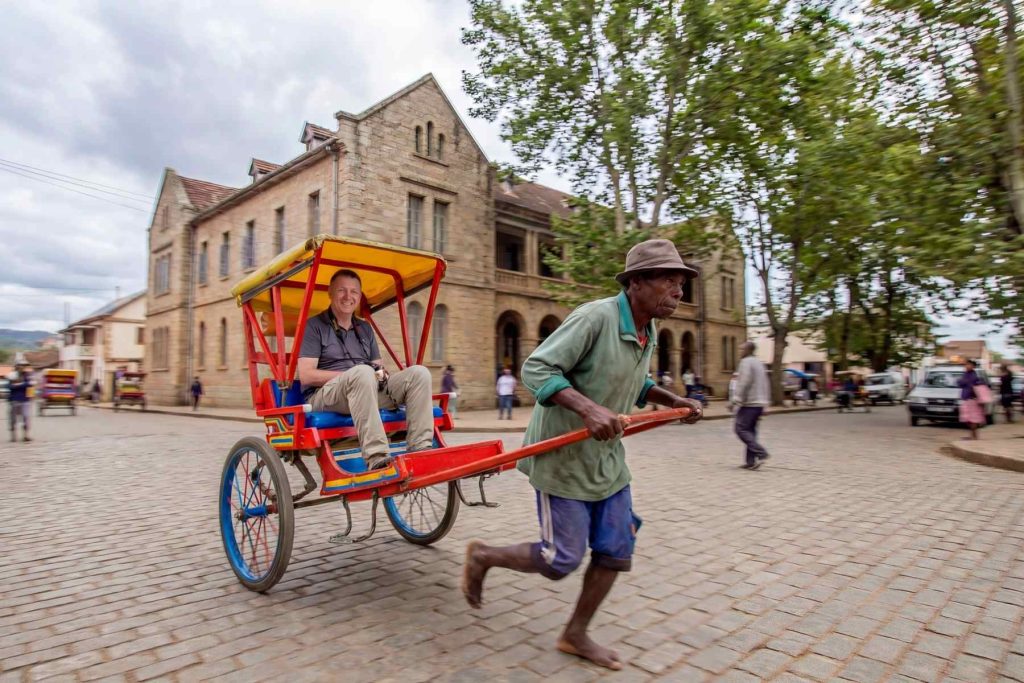
South out of the capital on the RN7, through terraced rice fields and the brick houses of the highlands. Stop at Ambatolampy to watch aluminium pots being cast by hand from scrap, then continue to Antsirabe — the 'city of water' — for the afternoon. Thermal springs, rickshaws, and a lapidary workshop where they cut the tourmaline and corundum the region is known for. Around 170 km, three hours of driving.
A longer drive south, 240 km and roughly five hours with stops. The road climbs through Ambositra, the Zafimaniry wood-carving centre — the houses here are built with carved shutters and the craft is UNESCO-listed. Arrive at Ranomafana in the afternoon, a former colonial spa town on the Namorona river, sitting right against the rainforest. If time allows, a first night walk after dinner.
A full day in the forest. Morning walk with a park guide looking for the golden bamboo lemur, discovered here in 1986 and found nowhere else, plus red-bellied lemurs, Milne-Edwards' sifaka and a dozen endemic birds. Afternoon at leisure, then a night walk for mouse lemurs, chameleons and frogs — the forest is louder after dark than during the day.
Down out of the rainforest to Fianarantsoa, the Betsileo capital, for a short walk through the old upper town. Continue south to Ambalavao where you visit an Antemoro paper workshop and a silk weaver working with wild cocoons, then late afternoon at the Anja Community Reserve — granite boulders, ring-tailed lemurs within metres, and a project that pays the surrounding villages directly. Drive back north to Fianarantsoa for the night, about 50 minutes.
The landscape changes for good today: the highlands flatten into open savannah and the road runs toward the Isalo massif, which appears as a wall of red sandstone on the horizon. Stop at the Antsokay arboretum and at a roadside sapphire pit near Ilakaka — not a polished tourist stop, the real thing. Overnight at the edge of Isalo National Park, around five hours of driving.
A full day on foot inside the park. The Namaza circuit takes in the blue and black pools, and the Piscine Naturelle is exactly what it sounds like — a clear pool in a canyon where you swim after three hours of walking. Late afternoon at the Window of Isalo for sunset, then back to the lodge. Around six hours walking, moderate, with shade in the canyons.
Continue southwest as the country turns properly dry — sisal plantations, zebu carts, and the thorny scrub that marks the approach to the coast. Reach Toliara and then Ifaty, 30 km north, by late afternoon. The reef is a few hundred metres offshore and the lagoon is calm enough to swim at any tide.
A free morning on the lagoon — snorkelling, a pirogue trip with the Vezo fishermen, or nothing at all. In the afternoon, a walk in the Reniala spiny forest reserve, where octopus trees, dwarf baobabs and the local 'didiereaceae' grow in conditions that look Martian. This is the ecosystem that exists nowhere else on earth at this density.
Transfer to Toliara airport for the domestic flight to Antananarivo, timed to connect with your international departure. If your flight leaves the following day we add a final night in the capital and a morning at the handicraft market — tell us your flight number and we will build the connection properly.
One price, quoted per person, with the awkward extras already in it. We publish what is not included too, so there are no surprises on the ground.
per person, based on two travellers sharing
The final figure depends on how many of you travel, your dates and the hotel category. Tell us your dates and we send one clear number — not a range.
Get the exact price for my datesReply within 24 hours, Monday to Saturday. Domestic flights quoted at the fare available on the day.
Madagascar is not a country where things fix themselves on the day. When the road is washed out or a flight moves, who you booked with decides how fast it gets solved.
| Booking direct with us | Booking through a reseller | |
|---|---|---|
| Who runs the tour | The operator, in Antananarivo | An agency that resells to a local operator |
| Price | Direct rate, no commission layer | Usually a commission added on top |
| If a flight or road changes | We rearrange it ourselves, same day | Message relayed to a third party |
| Vehicle and guide | Our own fleet, our own guides | Whichever supplier is available |
| Who answers your email | The person who will brief your guide | A call centre or sales desk |

The RN7 is a road trip, and we will not pretend otherwise. Two days are long — Antsirabe to Ranomafana at around five hours, and Ranohira to Ifaty at around six with stops. The rest are three to four hours. We break every drive with something worth stopping for, and the vehicle is yours, so the schedule bends to what you want to look at.
It is the shortest version that does not feel rushed. Ten days gives you two nights at Ranomafana, a full day in Isalo and two nights on the coast. If you have twelve, we add Andasibe at the start for the indri — that is the version most people end up booking.
April to November. The RN7 is a sealed road and runs year-round, but the highlands are cold and wet from December to March, and the Ifaty coast gets cyclone weather in January and February. July to October is the sweet spot: dry, cooler in the highlands, warm on the coast.
Moderate. The Namaza circuit is around six hours of walking with some rock steps and shade in the canyons, but no technical sections and no altitude. If you would rather do a shorter circuit, the Piscine Naturelle can be reached in about an hour and a half each way — tell your guide on the day.
Yes, starting with a flight to Toliara and driving north to the capital. It works well if you want the beach first. Some clients prefer it because the long drives come after you have acclimatised. It costs the same.
A mix of mid-range city hotels and lodges chosen for position rather than star ratings. Setam Lodge sits against the Ranomafana forest, and the Isalo lodges are on the park boundary. If you want the higher grade at any stop — Le Jardin du Roy at Isalo, Le Paradisier at Ifaty — we quote the difference before you book.
Most nationalities get a 15-day visa on arrival at Ivato for USD 35 or EUR 30 per person. Bring a passport valid for at least six months and proof of onward travel. We send the current rules for your nationality when you enquire.
A 30% deposit confirms the booking and the balance is due 30 days before you arrive. Card and bank transfer both work. You get a written invoice with the full breakdown before paying anything.
You are writing to the office in Antananarivo, not a call centre. A named person reads it, checks flight availability and hotel space for your dates, and comes back with a written plan you can approve or change.
Two minutes. The more you tell us, the more useful the first reply will be.